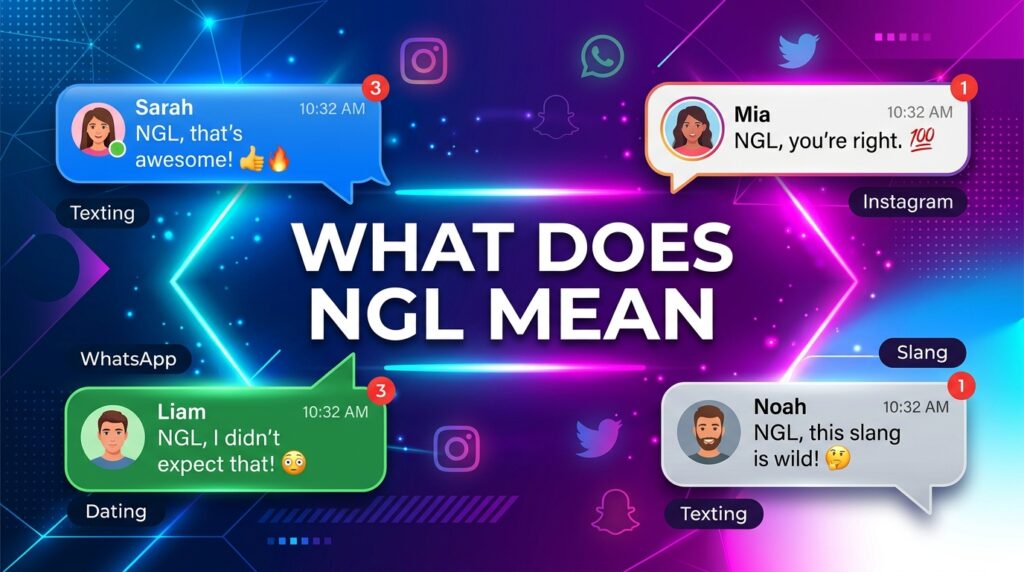
If you’ve spent any time on TikTok, Instagram, Snapchat, WhatsApp, or texting friends, you’ve probably seen someone type “NGL” before sharing an opinion. At first glance, it may seem like just another internet abbreviation, but it actually carries a deeper meaning in online conversations.
Many people search what does NGL mean because they want to understand whether it’s friendly, rude, flirty, or simply casual slang. Since abbreviations can have different meanings depending on the situation, it’s easy to misunderstand what someone is trying to say.
In this guide, you’ll learn exactly what NGL means, where it came from, how people use it in everyday conversations, and what it can reveal about emotions, honesty, and modern digital communication.
What Does NGL Mean? (Quick Meaning)
NGL stands for “Not Gonna Lie.” It’s a popular internet abbreviation people use before expressing an honest opinion, admitting something personal, or emphasizing that they’re being truthful.
Rather than sounding harsh, NGL often makes a statement feel more genuine and relatable. It tells the reader, “I’m about to be honest with you.”
Quick Definition
- Full form: Not Gonna Lie
- Category: Internet slang / texting abbreviation
- Tone: Honest, casual, conversational
- Common platforms: Instagram, TikTok, WhatsApp, Snapchat, Discord, X (Twitter), Facebook Messenger, and text messages
Example Meanings
“NGL, that movie was way better than I expected.”
“NGL, I’m really nervous about tomorrow.”
“NGL, you look amazing in that picture.”
In each example, NGL introduces a sincere thought or feeling, making the message sound more authentic.
Origin & Background of NGL
Like many internet abbreviations, NGL became popular because people wanted quicker ways to communicate online. Instead of typing “I’m not going to lie,” users shortened it to NGL, making conversations faster while keeping the same meaning.
Although people had been saying “not gonna lie” in everyday speech for decades, the abbreviation gained widespread popularity during the early days of texting and social media. As platforms like Twitter encouraged shorter messages, abbreviations such as LOL, BRB, IMO, and NGL naturally became part of internet culture.
How Social Media Helped NGL Grow
Social media transformed NGL from a simple abbreviation into a common conversation starter.
People use it to:
- Share honest opinions
- Admit embarrassing moments
- Compliment someone sincerely
- Express unexpected emotions
- Introduce unpopular opinions
For example:
- “NGL, I miss school sometimes.”
- “NGL, this song is addictive.”
- “NGL, I wasn’t expecting you to reply.”
Because it signals honesty, readers often pay more attention to whatever comes after it.
How the Meaning Has Evolved
Originally, “not gonna lie” simply meant someone was about to tell the truth.
Today, NGL serves several purposes beyond literal honesty:
- Softening criticism
- Making compliments feel genuine
- Adding humor
- Starting emotional conversations
- Showing vulnerability
In many cases, people even use NGL casually without intentionally emphasizing honesty. It has become part of the natural rhythm of online conversation.
Real-Life Conversations
Below are realistic examples showing how NGL appears across different messaging platforms.
WhatsApp Conversation
Person A: Are you coming to dinner tonight?
Person B: NGL, I’m exhausted after work. I might stay home and rest.
Instagram DM
Person A: Did you like my vacation photos?
Person B: NGL, they’re some of the best pictures you’ve ever posted.
TikTok Comments
Creator: I spent six months making this video.
Viewer: NGL, it was worth every second. Amazing work!
Text Message
Person A: Were you nervous before the interview?
Person B: NGL, I barely slept the night before, but everything turned out fine.
Emotional & Psychological Meaning of NGL
Although NGL is only three letters long, it often carries emotional weight. People use it when they want their words to sound honest, sincere, or heartfelt.
Instead of making a plain statement, adding NGL prepares the listener for something genuine. It creates a sense of openness and authenticity that can strengthen conversations.
It Signals Honesty
The biggest reason people use NGL is to emphasize truthfulness.
Compare these sentences:
- “You’re really talented.”
- “NGL, you’re really talented.”
The second version feels more personal because the speaker suggests they’re sharing an honest opinion rather than offering a routine compliment.
It Makes Vulnerability Easier
Many people find it difficult to admit fear, sadness, excitement, or admiration.
Adding NGL makes emotional expressions feel more natural.
For example:
- “NGL, I miss talking to you.”
- “NGL, I’m scared about the results.”
- “NGL, I didn’t expect to feel this happy.”
The abbreviation creates a softer transition into personal feelings.
It Can Build Trust
Online conversations often lack facial expressions and tone of voice. Because of that, people use small phrases like NGL to make messages sound more genuine.
Readers tend to perceive statements beginning with NGL as more sincere because the writer signals openness before sharing an opinion.
It Adds Personality to Digital Conversations
Internet slang isn’t just about saving time—it also reflects personality.
Someone who says:
“NGL, that pizza was incredible.”
sounds more conversational than someone who simply writes:
“The pizza was incredible.”
These subtle language choices help messages feel warmer and more human.
A Real-Life Scenario
Imagine you’ve been practicing for a presentation all week. After finishing, your friend texts you:
“NGL, you looked really confident up there.”
Those three letters make the compliment feel thoughtful and honest. Instead of sounding automatic, it feels like your friend genuinely means what they said, making the encouragement more meaningful and memorable.
Usage in Different Contexts
One of the reasons NGL has remained popular is its flexibility. Whether you’re chatting with friends, posting on social media, flirting with someone, or even giving feedback, NGL fits naturally into many types of conversations. The tone changes depending on the situation, but the core meaning—“Not Gonna Lie”—stays the same.
NGL on Social Media
Social media is where NGL appears most often. People use it to share honest reactions, unexpected opinions, or genuine compliments.
Examples include:
- “NGL, this trend is actually fun.”
- “NGL, your outfit is amazing!”
- “NGL, I didn’t expect this video to make me emotional.”
Using NGL at the beginning of a post makes it feel more personal, as though the writer is speaking directly to their audience.
NGL Among Friends and Relationships
Friends often use NGL when they want to be honest without sounding rude. It helps soften opinions while keeping the conversation natural.
Examples:
- “NGL, I miss hanging out with everyone.”
- “NGL, that joke was hilarious.”
- “NGL, I thought you were mad at me.”
In close relationships, it can also introduce heartfelt emotions or sincere compliments.
NGL at Work or in Professional Settings
Although NGL is common online, it isn’t always appropriate in formal communication.
For example, texting a coworker:
“NGL, today’s meeting went better than expected.”
may be acceptable if your workplace has a relaxed culture.
However, in professional emails, reports, client communication, or academic writing, it’s better to write:
- “To be honest…”
- “In my opinion…”
- “Frankly speaking…”
These alternatives sound more polished and professional.
Casual vs. Serious Tone
NGL can introduce both lighthearted comments and serious conversations.
Casual examples:
- “NGL, I could eat pizza every day.”
- “NGL, that’s my favorite movie.”
Serious examples:
- “NGL, I’ve been feeling stressed lately.”
- “NGL, that conversation really hurt my feelings.”
The abbreviation itself doesn’t determine the mood—the message that follows does.
What Does NGL Mean on Instagram?
On Instagram, NGL usually means “Not Gonna Lie.” Users place it before captions, comments, Stories, or direct messages to show they’re expressing a genuine thought.
For example:
- “NGL, this sunset is unreal.”
- “NGL, your latest reel deserves more views.”
- “NGL, you’ve been glowing lately.”
Because Instagram focuses on visual content, people often use NGL before giving compliments or sharing honest reactions to photos and videos. It makes comments feel more authentic instead of generic.
NGL Meaning from a Girl
When a girl uses NGL, she’s usually introducing an honest opinion or genuine feeling. The abbreviation itself isn’t flirtatious, but the message after it can reveal her intentions.
For example:
- “NGL, you’re really funny.”
- “NGL, I enjoyed talking to you today.”
- “NGL, I wasn’t expecting you to text me.”
Sometimes NGL signals admiration, while other times it’s simply a casual way to express honesty. Understanding the overall conversation is more important than focusing on the abbreviation alone.
What Does NGL Mean in WhatsApp?
On WhatsApp, NGL carries the same meaning: “Not Gonna Lie.” Since WhatsApp is used for everyday conversations with friends, family, and coworkers, NGL helps make messages feel more open and sincere.
Examples:
- “NGL, I forgot about our plans.”
- “NGL, today’s weather is perfect.”
- “NGL, I really needed that conversation.”
Because WhatsApp chats are usually informal, NGL fits naturally into daily communication.
What Does NGL Mean in Texting?
In text messages, NGL introduces honesty or emphasizes that someone is speaking from the heart.
Common examples include:
- “NGL, I’m excited for tomorrow.”
- “NGL, I thought you were joking.”
- “NGL, that’s one of the nicest things anyone has said to me.”
People often use it to make opinions sound more genuine without writing a long explanation.
What Does NGL Mean in Medical Terms?
Outside social media, NGL can have entirely different meanings in medical or scientific settings.
Depending on the context, NGL may refer to abbreviations used within healthcare organizations, laboratory reports, or research documents. These meanings are unrelated to internet slang and are generally understood only by medical professionals.
If you see NGL in a hospital record, prescription, or research paper, don’t assume it means “Not Gonna Lie.” Always consider the surrounding context or ask a healthcare professional for clarification.
NGL Meaning from a Boy
When a boy says NGL, he’s usually emphasizing honesty before expressing an opinion, compliment, or personal feeling.
Examples include:
- “NGL, I really like talking to you.”
- “NGL, you’re smarter than you think.”
- “NGL, I was nervous before meeting you.”
Like anyone else, boys use NGL to make their statements feel more sincere. The abbreviation doesn’t automatically indicate romantic interest—it depends on the rest of the conversation and the relationship between the two people.
What Does NGL Mean in Dating?
In dating conversations, NGL often makes messages feel more open and emotionally honest. It helps people express attraction, vulnerability, or appreciation without sounding overly dramatic.
Examples:
- “NGL, I had a great time tonight.”
- “NGL, I’ve been thinking about you.”
- “NGL, you’re different from anyone I’ve met before.”
Because dating often involves uncertainty, using NGL can make compliments and confessions sound more genuine, helping build trust between two people.
NGL App Meaning
The NGL app is a social media application that allows users to receive anonymous questions and messages through a personalized link, often shared on Instagram Stories.
Although the app is named NGL, it was inspired by the phrase “Not Gonna Lie.” Its branding encourages people to ask honest, anonymous questions without revealing their identities.
Many users share their NGL link with captions like:
- “Ask me anything!”
- “Be honest!”
- “Send anonymous questions.”
While the app promotes open interaction, users should remember that anonymous messaging can sometimes encourage inappropriate comments. It’s important to use privacy settings wisely and respond thoughtfully.
When NOT to Use It
Although NGL is widely accepted in casual conversations, there are situations where using it may be inappropriate or confusing.
Formal Business Communication
Avoid using NGL in professional emails, job applications, official presentations, or legal documents. It can appear too informal and reduce the professionalism of your message.
Instead of:
“NGL, I think this proposal needs changes.”
Write:
“In my opinion, this proposal could benefit from a few revisions.”
Academic Writing
School essays, research papers, and university assignments should avoid internet slang. Teachers and professors generally expect formal language.
Serious Emotional Situations
If someone is discussing grief, illness, or another sensitive topic, beginning with “NGL” may unintentionally sound casual or dismissive.
For example:
- ❌ “NGL, that’s really sad.”
- ✅ “I’m truly sorry you’re going through this.”
Choosing more compassionate wording shows greater empathy.
Cross-Generational Conversations
Older adults or people unfamiliar with internet slang may not recognize NGL. In these situations, writing out “to be honest” or “I’m being honest” avoids confusion.
Common Misunderstandings
Because NGL is so common online, people sometimes misunderstand what it actually means.
Mistaking It for a Negative Phrase
Some assume NGL signals criticism because it’s often followed by opinions.
Example:
“NGL, that movie wasn’t for me.”
However, NGL can introduce positive comments just as easily:
“NGL, that’s the best pizza I’ve ever had.”
The abbreviation itself is neutral.
Assuming It’s Always Flirty
A compliment beginning with NGL doesn’t automatically indicate romantic interest.
For example:
“NGL, you look great today.”
This could simply be a friendly compliment rather than flirting. The relationship, tone, and overall conversation matter more than the abbreviation itself.
Taking It Too Literally
People rarely use NGL because they were previously lying. Instead, it’s become a conversational habit that adds emphasis and sincerity.
For many users, it’s similar to saying:
- “Honestly…”
- “To be honest…”
- “Seriously…”
without implying dishonesty before the statement.
Comparison Table
| Search Intent | Explanation |
|---|---|
| What Does NGL Mean? | Learn that NGL stands for “Not Gonna Lie” and signals honesty or sincerity in casual conversations. |
| How to Use NGL | Place it before an opinion, compliment, confession, or personal feeling to make your message sound genuine. |
| Examples of NGL | “NGL, that was amazing.” “NGL, I miss those days.” “NGL, I didn’t expect that.” |
| NGL vs TBH (To Be Honest) | Both express honesty, but TBH is more traditional, while NGL feels more conversational and is especially popular among Gen Z on social media. |
Key Insight
The true power of NGL isn’t just that it means “Not Gonna Lie.” It’s a social cue that tells readers an honest opinion or genuine emotion is coming next. Whether you’re complimenting a friend, admitting a mistake, or sharing a personal thought, NGL helps create conversations that feel more authentic, relatable, and human.
Variations and Types of NGL (With Meanings)
Although NGL almost always means “Not Gonna Lie,” people search for different versions of the abbreviation depending on where they see it. Here are some of the most common variations.
1. NGL Meaning
The standard meaning of NGL is “Not Gonna Lie.” It’s used to introduce an honest opinion, feeling, or confession in casual conversations.
2. NGL in Text
In text messages, NGL signals sincerity before making a statement. It helps the message feel more genuine and personal.
3. NGL Abbreviation
As an abbreviation, NGL shortens the phrase “Not Gonna Lie,” making conversations quicker while keeping the same meaning.
4. NGL Slang
In internet slang, NGL is one of the most widely recognized abbreviations. It’s commonly used on TikTok, Instagram, Snapchat, Discord, and X.
5. NGL in Chat
People use NGL in chats to soften opinions, express emotions, or begin honest conversations without sounding overly serious.
6. NGL on Social Media
Across social media platforms, NGL often appears in captions, comments, and direct messages to add authenticity to personal thoughts.
7. NGL in Dating
In dating conversations, NGL often introduces genuine compliments, emotional confessions, or honest reactions that help build trust.
8. NGL in Gaming
Gamers frequently use NGL while discussing gameplay, teammates, or strategies.
Example: “NGL, that boss fight was harder than I expected.”
9. NGL Meme Meaning
Many memes begin with NGL before delivering an unexpected joke or relatable opinion, making the punchline feel more authentic.
10. NGL Online Meaning
Across the internet, NGL has become a universal way to signal honesty, regardless of the platform or audience.
How to Respond When Someone Uses NGL
The best response depends on the tone of the conversation. Since NGL often introduces honesty, replying thoughtfully keeps the conversation natural.
Casual Replies
- “I totally agree.”
- “Same here!”
- “That’s fair.”
- “I get what you mean.”
- “Honestly, I was thinking the same.”
Funny Replies
- “At least you’re honest 😂”
- “You finally admitted it!”
- “Well… someone had to say it.”
- “Facts only!”
- “No lies detected.”
Mature Replies
- “Thanks for being honest.”
- “I appreciate your perspective.”
- “That’s a fair point.”
- “I understand where you’re coming from.”
- “I’m glad you shared that.”
Respectful Replies
- “Thank you for telling me.”
- “I respect your honesty.”
- “That’s understandable.”
- “I appreciate your openness.”
- “Let’s talk about it.”
Regional & Cultural Usage
Although NGL has the same basic meaning worldwide, the way people use it varies across cultures and generations.
Western Culture
In countries like the United States, Canada, and the United Kingdom, NGL is part of everyday online language. People use it freely in texting, memes, gaming, and social media.
It often introduces honest opinions, compliments, or humorous observations.
Asian Culture
In many Asian countries, younger internet users frequently use NGL while chatting in English or mixing English with their native language.
However, formal conversations still tend to avoid internet slang, especially in educational and professional settings.
Middle Eastern Culture
English-speaking social media users across the Middle East also recognize NGL, particularly on Instagram, TikTok, and Snapchat.
Because communication styles can be more formal in certain situations, users generally reserve NGL for conversations with close friends rather than elders or professional contacts.
Global Internet Usage
Thanks to social media, gaming communities, and online forums, NGL has become internationally understood.
Even people whose first language isn’t English often recognize the abbreviation because of its widespread use in memes, viral videos, and influencer content.
Gen Z vs. Millennials
Gen Z uses NGL naturally in daily conversations. It’s often paired with other abbreviations like TBH, IMO, FR, ICYMI, and IDK.
Millennials also understand NGL, but many still prefer writing phrases like “to be honest” instead of relying on abbreviations. As a result, NGL feels slightly more youthful and internet-driven.
Is It Safe for Kids?
Yes, NGL itself is generally safe for kids because it simply means “Not Gonna Lie.” It’s a harmless abbreviation used to express honesty in casual conversations.
However, parents should be aware of the NGL anonymous messaging app, where users can receive anonymous questions. While the abbreviation is innocent, anonymous messaging platforms may expose children to inappropriate or unkind messages. Encouraging responsible online behavior and discussing digital safety can help young users navigate these apps more confidently.
Frequently Asked Questions (FAQs)
1. What does OTG mean in text?
In texting, OTG most commonly stands for “On The Go.” People use it to let others know they’re busy, traveling, or unable to chat for long because they’re moving between places. Depending on the context, OTG can have other meanings, but “On The Go” is the most widely recognized in everyday messaging.
2. Is NGL Gen Z slang?
Yes, NGL is considered a popular piece of Gen Z slang, although Millennials and many older internet users understand it as well. It became especially popular through TikTok, Instagram, Snapchat, and online gaming, where quick, honest expressions are part of everyday communication.
3. What does TBH and NGL mean?
TBH stands for “To Be Honest,” while NGL means “Not Gonna Lie.” Both abbreviations introduce honest opinions or personal feelings, but NGL often sounds more casual and conversational, making it especially common among younger social media users.
4. What does the NGL stand for?
The abbreviation NGL stands for “Not Gonna Lie.” People use it before sharing a sincere opinion, compliment, confession, or reaction to show they’re speaking honestly. It’s one of the most common internet slang terms used in texting and social media.
5. Can NGL have different meanings?
In most online conversations, NGL almost always means “Not Gonna Lie.” However, in specialized fields such as healthcare, science, or business, the same abbreviation may represent something entirely different, so it’s important to consider the context before interpreting it.
6. Why do people say NGL before a sentence?
People say NGL to make their opinion or statement sound more genuine and believable. It acts as a conversational cue that tells the reader an honest thought is coming, helping messages feel more personal, authentic, and relatable in digital communication.
7. What does NGL stand for?
NGL stands for “Not Gonna Lie.” It’s an internet abbreviation people use before expressing an honest opinion, feeling, or confession in casual conversations.
8. What does NGL mean in texting?
In texting, NGL signals sincerity. It lets the other person know that the message that follows is genuine, personal, or based on an honest opinion.
9. Is NGL considered slang?
Yes. NGL is internet slang commonly used on social media, messaging apps, gaming platforms, and online communities to make conversations sound more natural.
10. What does NGL mean on Instagram?
On Instagram, NGL usually means “Not Gonna Lie.” People use it in captions, comments, Stories, and direct messages to share authentic reactions or compliments.
11. Does NGL have different meanings?
In online conversations, NGL almost always means “Not Gonna Lie.” In specialized fields like medicine or business, the same abbreviation may represent something entirely different depending on the context.
12. Is NGL rude?
No. NGL isn’t rude by itself. Its tone depends on the words that follow. It can introduce compliments, jokes, criticism, or emotional confessions in a friendly and honest way.
13. Can I use NGL in professional emails?
It’s best to avoid NGL in formal emails or workplace documents. Instead, use phrases like “to be honest” or “in my opinion” to maintain a professional tone.
Conclusion
Understanding what does NGL mean helps you communicate more naturally in today’s digital world. Whether you’re chatting with friends, posting on Instagram, texting someone you like, or joining conversations on TikTok, NGL is simply a friendly way to introduce an honest thought or feeling. While it’s perfect for casual communication, it’s best avoided in formal settings. Once you understand its meaning and context, you’ll recognize NGL as more than just slang—it’s a simple expression of sincerity that makes online conversations feel more genuine and relatable.