If you’ve spent any time on TikTok, Instagram, Snapchat, or texting with friends, you’ve probably seen the phrase IDGAF pop up in conversations. It is one of the most widely used internet abbreviations, yet many people still wonder what it actually means and when it should be used.
People search for “IDGAF stands for” because the acronym appears in memes, social media captions, viral comments, song lyrics, and everyday texting. Depending on the situation, it can sound funny, confident, rebellious, or even rude.
This guide explains the meaning of IDGAF, where it came from, how people use it today, and what it reveals about modern online communication.
IDGAF Stands For – Quick Meaning
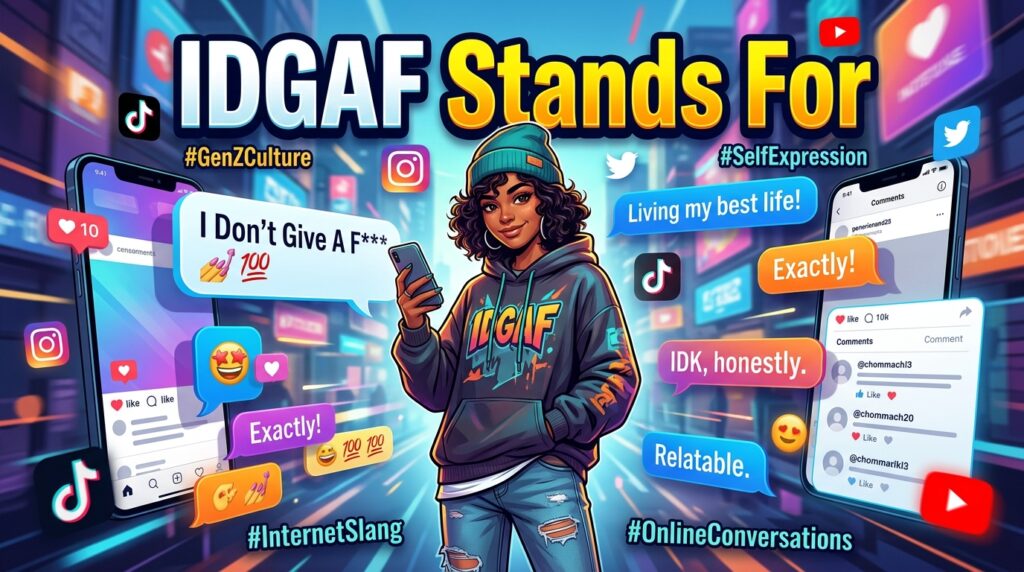
IDGAF stands for “I Don’t Give A F*.”**
It is a slang expression used when someone wants to show that they do not care about something, someone’s opinion, criticism, or a particular situation.
Quick Definition
- IDGAF = I Don’t Give A F* **
- Expresses indifference, confidence, frustration, or emotional detachment
- Common in texting, social media, and casual conversations
- Usually considered informal and sometimes offensive
Examples
“People keep talking, but IDGAF.”
“Wear what makes you happy. IDGAF what others think.”
“He canceled again? Honestly, IDGAF anymore.”
Origin & Background
The phrase behind IDGAF existed long before the internet. People have used “I don’t give a f***” in spoken English for decades to express strong indifference.
As texting became popular in the late 1990s and early 2000s, users started shortening lengthy phrases into abbreviations. This led to the creation of IDGAF.
Social media accelerated its popularity. Platforms like Twitter, Instagram, TikTok, and Reddit helped spread the acronym across different cultures and age groups.
Over time, the meaning evolved. While it originally sounded aggressive, many people now use it humorously or as a way to express self-confidence and emotional independence.
Today, IDGAF is often associated with:
- Self-confidence
- Personal freedom
- Ignoring negativity
- Setting boundaries
- Internet humor
Real-Life Conversations
WhatsApp Conversation
Person A: Everyone keeps criticizing my new haircut.
Person B: If you like it, that’s what matters.
Person A: Exactly. IDGAF what they think.
Instagram DM
Person A: Why did you post that picture?
Person B: Because I liked it.
Person A: People are judging.
Person B: IDGAF honestly.
TikTok Comments
Person A: Your outfit looks weird.
Person B: Thanks for the view.
Person A: That’s rude.
Person B: IDGAF. Have a great day though.
Text Message
Person A: Are you worried about what everyone is saying?
Person B: Not anymore.
Person A: Really?
Person B: Yep. IDGAF now.
Emotional & Psychological Meaning
At its core, IDGAF expresses emotional distance from something that once mattered or never mattered in the first place.
People often use it when they want to communicate:
- Confidence
- Independence
- Frustration
- Defiance
- Emotional protection
Sometimes IDGAF is genuine. Other times it acts as a shield to hide disappointment or hurt feelings.
Imagine someone receiving criticism online every day. Eventually, they may start saying “IDGAF” as a way of protecting their mental energy and maintaining confidence. In that sense, the phrase becomes more than slang—it becomes a coping mechanism.
Modern communication often rewards strong emotional statements, and IDGAF fits perfectly into that culture.
Usage in Different Contexts
Social Media
On social platforms, IDGAF is commonly used in captions, comments, and memes.
Example:
“Living my life and IDGAF what anyone says.”
It often communicates confidence and authenticity.
Friends & Relationships
Among friends, the phrase can be playful or serious.
Example:
“IDGAF where we eat. You choose.”
In relationships, however, it may sometimes sound dismissive if used carelessly.
Work & Professional Settings
Using IDGAF in professional environments is generally not recommended.
It can appear disrespectful and unprofessional, especially in emails, meetings, or workplace chats.
Casual vs Serious Tone
Casually, IDGAF may sound humorous.
In serious conversations, it can signal emotional detachment or frustration and may impact how others perceive the speaker.
When NOT to Use It
Professional Communication
Avoid using IDGAF in business emails, interviews, or workplace discussions.
Sensitive Situations
If someone is discussing grief, mental health struggles, or serious personal issues, the phrase can appear insensitive.
Formal Writing
Academic papers, reports, and official documents should not contain internet slang like IDGAF.
Cross-Cultural Conversations
Not everyone understands internet abbreviations, which can lead to confusion or offense.
Common Misunderstandings
Many people assume IDGAF always means anger.
In reality, it can express confidence, humor, sarcasm, or emotional exhaustion depending on context.
Another misunderstanding is that users literally do not care. Sometimes they care deeply but use IDGAF to appear strong or unaffected.
Tone matters greatly. The same acronym can sound empowering in one situation and rude in another.
Comparison Table
| Term | Meaning / Intent |
|---|---|
| What Does IDGAF Mean | Understanding the definition |
| How to Use IDGAF | Learning proper usage |
| Examples of IDGAF | Seeing real conversations |
| IDGAF vs IDC | IDGAF is stronger and more emotional |
| IDGAF vs Whatever | IDGAF sounds more direct and intense |
| IDGAF vs YOLO | IDGAF focuses on indifference, YOLO on taking chances |
| IDGAF vs IDAF | Similar meaning, shorter variation |
Key Insight
The biggest difference between IDGAF and similar expressions is intensity. It carries a stronger emotional impact and often communicates confidence or frustration more forcefully than alternatives.
Variations / Types
IDGAF Meaning
Acronym for “I Don’t Give A F***.”
IDGAF in Text
Used to show indifference during texting conversations.
IDGAF Abbreviation
A shortened internet version of a strong phrase.
IDGAF Slang
Popular digital slang used across social media.
IDGAF in Chat
Common in messaging apps and online discussions.
Idgaf stands for in English
The complete English phrase is “I Don’t Give A F***.”
IDAF Meaning in Chat
A shortened variation meaning “I Don’t Actually Care” or “I Don’t Give A F***” depending on context.
YDGAF
Means “You Don’t Give A F***.”
IDGAFER
A playful label for someone who acts completely carefree.
IDGAF LXNE
Often associated with usernames, music titles, or online branding using the acronym.
What Does IDGAFWABGTSAMIKWTFIDAWTFIDD Mean?
This extremely long internet joke expands to:
“I Don’t Give A F* What A B**** Got To Say About Me, I Know What The F*** I Did And What The F*** I Didn’t Do.”**
It is mostly used humorously in memes and viral social media posts.
IDGAFWABGTSAMIKWTFIDAWTFIDD
The phrase became popular because of its exaggerated length and dramatic attitude. It emphasizes complete disregard for criticism.
Gyat Full Form
GYAT generally means “Girl Your A Thick”** or is used as an expression of surprise and admiration online, especially among Gen Z users.
How to Respond When Someone Uses It
Casual Replies
- “Fair enough.”
- “You do you.”
- “That’s your choice.”
Funny Replies
- “The confidence level is impressive.”
- “Tell us how you really feel.”
- “Zero cares detected.”
Mature Replies
- “I understand your perspective.”
- “That’s completely your decision.”
- “Whatever works best for you.”
Respectful Replies
- “I respect your opinion.”
- “Thanks for being honest.”
- “I appreciate your viewpoint.”
Regional & Cultural Usage
Western Culture
IDGAF is widely understood and commonly used among younger internet users.
Asian Culture
Usage exists online, but people may prefer softer expressions in face-to-face conversations.
Middle Eastern Culture
The phrase may be viewed as overly direct because many cultures emphasize respectful communication.
Global Internet Usage
Thanks to social media, IDGAF has become a globally recognized internet expression.
Gen Z vs Millennials
Gen Z often uses IDGAF humorously or ironically.
Millennials tend to use it more literally to express frustration or independence.
Is It Safe for Kids?
IDGAF contains a hidden profanity, making it unsuitable for young children in many situations.
Teenagers frequently encounter it online, but parents and educators should provide context about appropriate language and respectful communication.
Understanding the meaning is fine, but using it should depend on age, audience, and situation.
FAQs
How is IDGAF used in social media?
IDGAF is commonly used in social media captions, comments, and memes to show confidence, independence, or a carefree attitude. People often use it when ignoring criticism or expressing that they are not affected by negative opinions. The term is especially popular on TikTok, Instagram, and X (formerly Twitter).
Is IDGAF a common slang term?
Yes, IDGAF is a very common internet slang term that has been widely used for years. It appears frequently in texting, social media posts, song lyrics, and online discussions. Its popularity comes from its ability to express strong emotions in a short and recognizable way.
What is ICYDK?
ICYDK stands for “In Case You Didn’t Know.” It is used when someone wants to share information, news, or a fact that others may not already be aware of. The abbreviation is common in social media posts, text messages, and online articles.
What is JIC in chat?
JIC stands for “Just In Case.” People use it when taking precautions or providing extra information that might be useful later. In chats and texting, it often appears in messages like, “I’m sending the address JIC you need it.”
What does IDGAF mean in a relationship?
In a relationship, IDGAF can mean that someone has stopped worrying about a situation or another person’s opinion. Depending on the tone, it may signal confidence and emotional independence or suggest frustration and emotional distance. Context is important when interpreting its meaning.
Is IDGAF considered offensive?
Because IDGAF contains an implied profanity, some people may find it offensive or disrespectful. While it is widely accepted among friends and on social media, it may not be appropriate in professional, formal, or sensitive situations. Users should consider their audience before using it.
Can IDGAF be used jokingly?
Yes, many people use IDGAF humorously rather than seriously. Friends often use it in playful conversations, memes, and funny social media posts to exaggerate a carefree attitude. The intended tone is usually easy to recognize from the surrounding context.
What is the difference between IDGAF and IDAF?
Both expressions communicate indifference, but IDGAF is generally stronger and more emotionally charged. IDAF is a shorter variation that some users prefer because it appears slightly less aggressive. Despite the difference, both terms share a very similar meaning.
Why is IDGAF popular among Gen Z?
Gen Z often uses IDGAF because it aligns with themes of authenticity, confidence, and setting personal boundaries. Social media culture encourages quick, expressive language, making abbreviations like IDGAF especially appealing. It is frequently used in trends, captions, and viral content.
What should I reply when someone says IDGAF?
A good response depends on the situation and tone of the conversation. You can reply casually with “Fair enough,” humorously with “Confidence level unlocked,” or respectfully with “I understand your point of view.” Matching the tone helps keep the conversation comfortable and natural.
What does IDGAF stand for exactly?
IDGAF stands for “I Don’t Give A F***.” It is a slang abbreviation used to express strong indifference toward something or someone’s opinion.
Is IDGAF rude?
It can be. Because it contains a profanity, some people may find it offensive. The impact depends on the audience and context.
What is the difference between IDGAF and IDC?
IDC means “I Don’t Care,” while IDGAF is stronger and carries more emotion and intensity.
Is IDGAF popular on TikTok?
Yes. TikTok users often include IDGAF in captions, comments, memes, and videos expressing confidence or rebellion.
Can I use IDGAF at work?
Generally no. Professional communication usually requires more respectful and formal language.
What does YDGAF mean?
YDGAF stands for “You Don’t Give A F***.” It refers to another person’s indifferent attitude.
Is IDGAF a Gen Z slang term?
While older generations use it too, Gen Z has helped popularize it through social media and internet culture.
Conclusion
Understanding what IDGAF stands for helps you navigate modern internet conversations with more confidence. While the phrase literally means “I Don’t Give A F,” its real meaning often goes beyond simple indifference. It can express confidence, emotional boundaries, frustration, humor, or personal freedom. Context always matters. Used appropriately, IDGAF can communicate authenticity and self-assurance. Knowing when to use it—and when not to—ensures you understand both the language and the culture behind today’s online communication.