In today’s fast-moving digital world, people don’t type full sentences anymore—they type emotions. One of the most commonly used slang expressions you’ll see on Snapchat, Instagram, TikTok, and WhatsApp is “IDGAF”.
But many users still search “idgaf full form in chat” because the meaning can feel rude, confusing, or even emotional depending on the situation.
Simply put, IDGAF is not just an abbreviation—it’s an attitude. It reflects frustration, confidence, anger, or sometimes complete emotional detachment. People use it when they want to show they don’t care about opinions, drama, or judgment.
This article breaks down everything: meaning, usage, emotional depth, real conversations, cultural context, and even how to respond when someone sends it.
Idgaf Full Form in Chat in Urdu
IDGAF full form: “I Don’t Give A F**”*
In Urdu, it can be understood as:
- “Mujhe koi farq nahi parta”
- “Mujhe parwah nahi”
- “Main ignore karta/karti hoon”
Simple Meaning:
It expresses complete indifference or emotional detachment.
Example in chat:
- “People are talking about me again.”
- “IDGAF honestly.”
- “She left the group.”
- “IDGAF, her choice.”
👉 It is usually rude or strong, depending on tone.
Idgafer Meaning in Chat
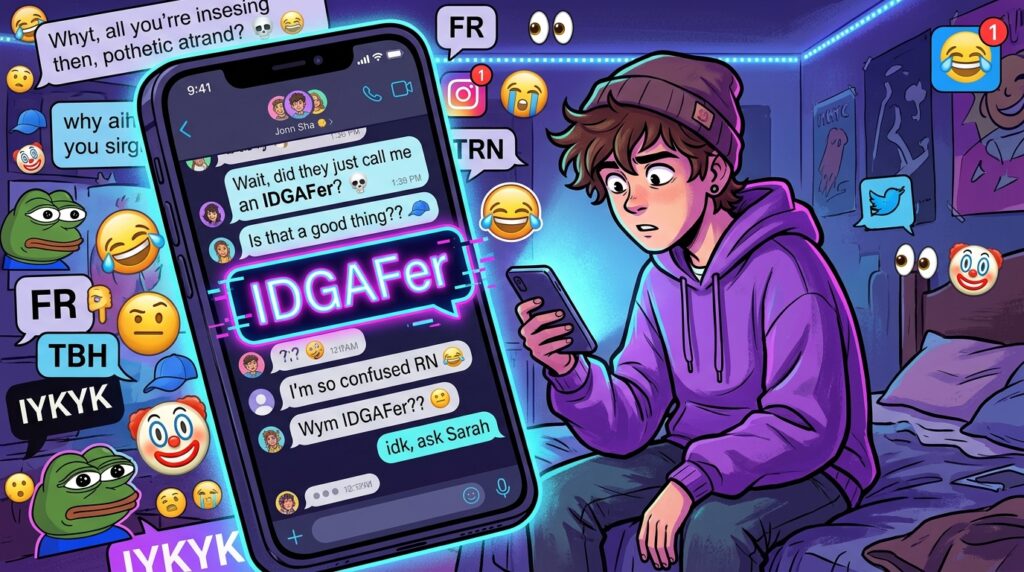
Idgafer is not an official abbreviation, but it is often used as a playful or exaggerated version of IDGAF.
Meaning:
- Someone who acts like they don’t care at all
- A “careless attitude” personality
Example:
- “He’s such an idgafer, nothing bothers him.”
- “Stop being an idgafer and reply properly.”
It is more slang-based and less offensive than IDGAF itself.
Idgac Meaning in Text
IDGAC = I Don’t Give A Crap
Meaning:
A softer version of IDGAF, used when people want to sound less harsh.
Examples:
- “They didn’t invite me.”
- “IDGAC, I have other plans anyway.”
- “People are judging you.”
- “IDGAC honestly.”
👉 It is still rude but slightly more socially acceptable in casual chats.
Idaf Meaning in Chat
IDAF = I Don’t F*ing Care**
Meaning:
Very close to IDGAF but slightly different tone.
Usage:
- More emotional or angry expression
- Used in heated conversations
Example:
- “He lied again.”
- “IDAF anymore.”
- “Let them think what they want.”
- “IDAF.”
👉 It shows emotional exhaustion more than confidence.
DILLIGAF Full Form

DILLIGAF = Do I Look Like I Give A F*?**
Meaning:
This is a rhetorical slang used to express sarcasm and strong indifference.
Example:
- “Are you worried about what they said?”
- “DILLIGAF?”
👉 It is often used humorously or aggressively depending on tone.
What Does idgafwabgtsam ikwtfidawtfidd Mean
This is an exaggerated internet-style slang mashup combining multiple expressions:
- IDGAF = I Don’t Give A F***
- WABGTSAM = With A Big Grin To Show Amusement (informal interpretation)
- IKWTFIDAWTFIDD = I Know What The F*** I’m Doing And What The F*** I Don’t
Meaning:
It expresses extreme confidence, sarcasm, and emotional dominance in chaotic internet humor.
Simple explanation:
👉 “I don’t care, I know what I’m doing, and I’m laughing while doing it.”
It is mostly used for jokes, memes, or trolling.
Full Form of IDC
IDC = I Don’t Care
Meaning:
A milder version of IDGAF.
Example:
- “Do you want to join?”
- “IDC.”
- “They’re upset.”
- “IDC honestly.”
👉 It is common in everyday texting and less offensive.
What Does IDGAFWABGTSAM Mean
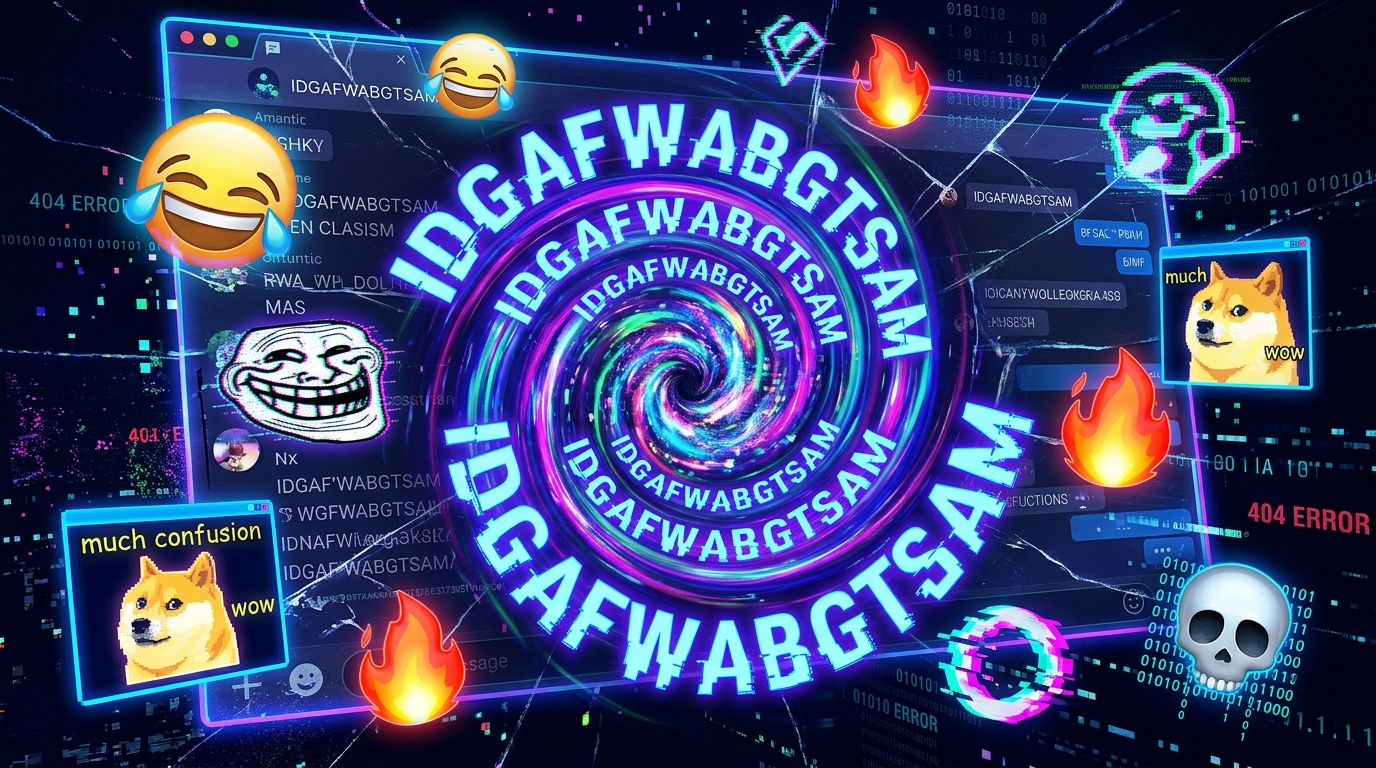
This extended slang is a hyper-expressive internet phrase combining indifference + humor + confidence.
Meaning breakdown:
- IDGAF → I don’t care
- WABGTSAM → playful emotional exaggeration
- Combined meaning → “I don’t care and I’m enjoying it”
Usage:
- Meme captions
- TikTok humor
- Sarcastic replies
Origin & Background
Slang like IDGAF originated from early internet chat rooms and texting culture where people shortened phrases to type faster.
Over time:
- Forums like Reddit
- Platforms like Twitter (X)
- TikTok comment culture
…turned these abbreviations into emotional expressions rather than just shortcuts.
Gen Z especially transformed IDGAF into a digital personality trait, not just a phrase.
It now represents:
- Confidence
- Rebellion
- Emotional burnout
- Humor in detachment
Real-Life Conversations (MANDATORY)
💬 WhatsApp Chat
Person A: “They’re gossiping about you again.”
Person B: “IDGAF, let them talk.”
💬 Instagram DM
Person A: “Why didn’t you reply to them?”
Person B: “IDC, I was busy living my life.”
💬 TikTok Comment Section
User 1: “People are hating on your video.”
Creator: “IDGAF, I’m still posting.”
💬 Text Message
Friend: “He unfollowed you.”
Friend 2: “IDAF anymore, honestly.”
Emotional & Psychological Meaning
IDGAF is not always about anger—it often hides deeper emotions.
People use it when they:
- Feel emotionally drained
- Want to appear strong
- Are tired of judgment
- Try to protect their self-esteem
Psychological insight:
It acts like a “digital shield” against negativity.
Scenario:
A student gets criticized online. Instead of replying emotionally, they type “IDGAF.” But internally, they may still feel hurt.
👉 So sometimes, it’s confidence on the surface but emotional defense underneath.
Usage in Different Contexts
Social Media:
Used for bold captions, memes, or replies to hate comments.
Friends & Relationships:
Used jokingly or during arguments.
Work / Professional Settings:
Not appropriate. It sounds rude and unprofessional.
Casual vs Serious Tone:
- Casual: funny or relaxed
- Serious: emotional or aggressive
When NOT to Use It
Avoid using IDGAF when:
- Talking to teachers or bosses
- In formal discussions
- During sensitive emotional conversations
- When you don’t want to hurt someone’s feelings
👉 It can easily sound disrespectful.
Common Misunderstandings
Many people think:
- It always means anger (not true)
- It is always offensive (depends on context)
- It should be used casually everywhere (incorrect)
Tone matters a lot:
- With friends → playful
- In conflict → aggressive
- Online → expressive
Comparison Table
| Term | Meaning Intent | Usage Intent | Example Intent | Comparison |
|---|---|---|---|---|
| IDGAF | I don’t care strongly | Emotional detachment | “IDGAF what they think” | Strongest version |
| IDC | I don’t care mildly | Casual indifference | “IDC honestly” | Softer tone |
| IDAF | I don’t f***ing care | Emotional frustration | “IDAF anymore” | Angrier tone |
| DILLIGAF | Do I look like I care? | Sarcasm | “DILLIGAF?” | Humorous/rude |
Key Insight:
All these terms express indifference, but intensity and emotional tone define how they are perceived.
Variations / Types (8–10)
- IDGAF meaning – strong indifference
- IDGAF in text – used in chats to show carelessness
- IDC slang – casual version of IDGAF
- IDAF meaning chat – emotional frustration version
- DILLIGAF slang – sarcastic expression of not caring
- IDGAC meaning text – softer rude alternative
- IDGAF abbreviation – shortened emotional phrase
- IDGAF in chat – used in messaging apps
- IDC abbreviation – mild indifference term
- IDGAF tone slang – depends on emotional context
How to Respond When Someone Uses It
😎 Casual Replies:
- “Same honestly.”
- “Haha okay chill.”
- “Fair enough.”
😂 Funny Replies:
- “Someone woke up savage today!”
- “Okay Mr. IDGAF 😂”
🙂 Mature Replies:
- “Alright, I understand.”
- “No worries, take your time.”
🤝 Respectful Replies:
- “Got it, let me know if you change your mind.”
- “I understand your point.”
Regional & Cultural Usage
Western Culture:
Very common in memes, tweets, and casual speech.
Asian Culture:
Used more carefully due to respect norms; can be seen as rude.
Middle Eastern Culture:
Less commonly used in formal contexts but popular among youth online.
Global Internet Usage:
Universal slang in Gen Z digital communication.
Generational Differences:
- Gen Z → casual, humorous use
- Millennials → more cautious usage
Is It Safe for Kids?
No, not fully safe.
Why:
- Contains strong language
- Can promote rude tone
- Not suitable for formal communication learning
Parents often discourage its use in school settings.
FAQs
What does IDGF mean in text?
IDGF is usually a shortened or misspelled variation of IDGAF, and it still carries the same idea of not caring about something. In texting, people often type it quickly, so spelling changes happen naturally. It generally expresses indifference, frustration, or emotional detachment depending on the conversation tone.
What does IDGAF mean for Gen Z?
For Gen Z, IDGAF is more than slang—it reflects confidence, independence, and sometimes emotional burnout. It is often used in memes, captions, and casual chats to show that someone is unbothered by opinions or drama. However, it can also be playful rather than aggressive depending on context.
What does “ify” mean in chat?
In chat, “ify” is not a formal abbreviation but is often used as slang shorthand or typing variation depending on context. Sometimes it appears as part of words or usernames rather than a standalone meaning. In casual texting, its meaning usually depends on surrounding conversation rather than a fixed definition.
What does IDGAF mean in a relationship?
In relationships, IDGAF usually signals emotional distance, frustration, or detachment from arguments or situations. It may show that a person is tired of conflicts or no longer interested in reacting emotionally. However, it can also be a defensive phrase used during heated moments rather than a permanent feeling.
What does IDGAF mean on social media?
On social media, IDGAF is commonly used in captions, comments, or replies to show confidence and ignoring negativity. People use it when they want to appear unbothered by hate, criticism, or opinions. It is also popular in memes and short videos to create a bold personality image.
Why do people use IDGAF instead of saying I don’t care?
People prefer IDGAF because it sounds stronger, more expressive, and emotionally impactful than simply saying “I don’t care.” It also fits modern texting culture where short, punchy slang is more common. The phrase helps users quickly express attitude without writing long sentences.
Is IDGAF offensive or rude?
IDGAF can be considered rude because it contains strong language, especially in formal or sensitive conversations. However, among friends or in casual online spaces, it is often used jokingly or without serious intent. The meaning depends heavily on tone and situation.
What is the difference between IDGAF and IDC?
IDGAF is a stronger and more emotional version of IDC, often showing frustration or complete detachment. IDC simply means mild indifference and is less aggressive in tone. Both express not caring, but IDGAF carries more intensity and emotional weight.
Can IDGAF be used in professional chats?
IDGAF should not be used in professional or workplace communication because it is informal and contains offensive language. It may create a negative impression or seem disrespectful. In professional settings, neutral phrases like “I don’t have a preference” are more appropriate.
What does IDGAF usually indicate emotionally?
Emotionally, IDGAF often indicates someone is trying to protect themselves from stress, criticism, or emotional overload. It can show confidence on the surface but sometimes hides irritation or hurt feelings underneath. People use it as a way to stay mentally detached in difficult situations.
What does IDGAF mean in chat?
It means “I Don’t Give A F***,” showing strong indifference or emotional detachment.
Is IDGAF rude?
Yes, it can be rude depending on tone and situation.
What is IDC meaning?
IDC stands for “I Don’t Care,” a softer version of IDGAF.
What does DILLIGAF mean?
It means “Do I Look Like I Give A F***?” used sarcastically.
Can I use IDGAF in school chats?
No, it is not appropriate for formal or educational settings.
Is IDGAF always negative?
Not always—it can also show confidence or humor.
What is IDAF meaning?
It means “I Don’t F***ing Care,” usually used in frustration.
Conclusion
IDGAF is more than just a slang abbreviation—it’s a digital expression of emotion, attitude, and mindset. People use it to show confidence, frustration, or emotional distance in online conversations. While it may seem rude, its meaning changes based on context and tone. Understanding it helps you navigate modern internet communication better. Whether you see it in chats, memes, or comments, remember it reflects feelings behind words. Use it carefully, and always consider where and with whom you’re speaking.