If you’ve ever received a message saying, “You’ve been MIA lately,” you may have wondered what it actually means. The phrase appears everywhere—from text messages and Instagram captions to workplace emails and military conversations. Because it has multiple meanings, many people become confused about how it’s being used.
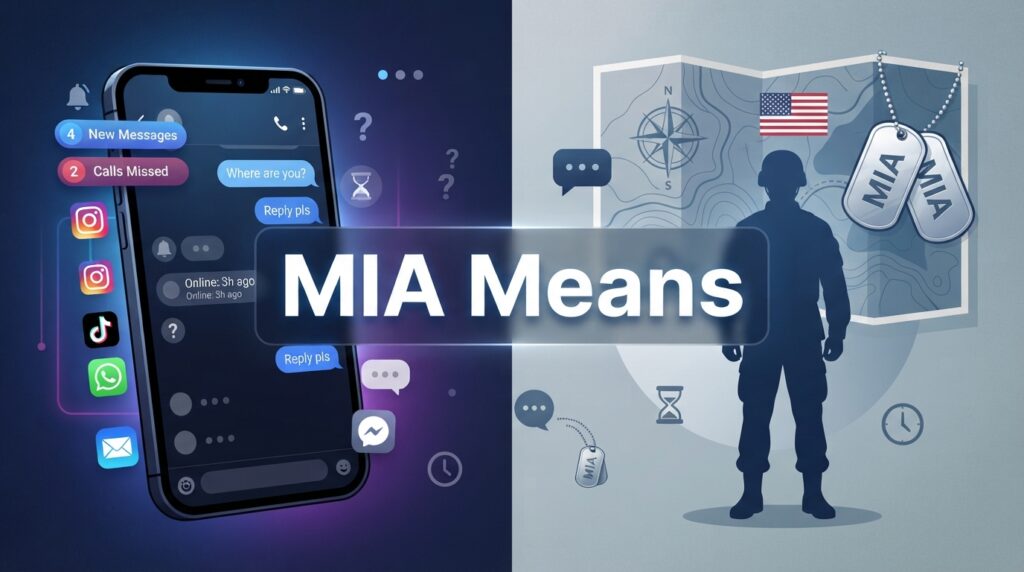
In most everyday situations, MIA means “Missing In Action.” While it originally came from the military, today it usually describes someone who has disappeared from conversations, social media, work, or relationships for a while. This guide explains every major meaning of MIA, where it came from, and how people use it across different situations.
MIA Means – Quick Meaning
The most common meaning of MIA is:
- Missing In Action
- Someone who has disappeared or stopped responding.
- Someone who hasn’t been seen, heard from, or active recently.
Examples
“You’ve been MIA all week. Everything okay?”
“She went completely MIA after graduation.”
“Our teammate has been MIA since Monday.”
Although the expression often sounds casual online, its original meaning is much more serious.
Origin & Background
The abbreviation MIA (Missing In Action) first became widely recognized through military reports during wars. It referred to soldiers whose whereabouts were unknown after combat.
Over time, the phrase entered everyday English. Instead of referring to soldiers, people started using it humorously or casually whenever someone disappeared from conversations or social activities.
Today, social media has made the phrase even more popular. If someone doesn’t reply to messages, stops posting online, or suddenly becomes inactive, friends often say they’re “MIA.”
The expression has evolved from a formal military status into one of the internet’s most common slang abbreviations.
Real-Life Conversations
Person A: Where have you been?
Person B: Sorry! I’ve been totally MIA because of exams.
Instagram DM
Person A: Haven’t seen your posts lately.
Person B: Yeah, I’ve been MIA. Needed a little social media break.
TikTok Comments
Person A: You disappeared!
Person B: Haha, I went MIA while finishing my final project.
Text Messages
Person A: Dude, you’ve been MIA for days.
Person B: I know. Work has been crazy lately.
Emotional & Psychological Meaning
When someone says they’re MIA, they’re usually communicating more than physical absence.
It can express:
- Feeling overwhelmed
- Taking a mental health break
- Being emotionally exhausted
- Being extremely busy
- Wanting personal space
Imagine a close friend suddenly stops replying for several days. Later they say, “Sorry, I went MIA because life became overwhelming.” In that situation, MIA isn’t just about being absent—it also communicates emotional fatigue without explaining every detail.
This is one reason the abbreviation feels relatable in modern communication.
Usage in Different Contexts
MIA Meaning in Relationship
In relationships, MIA often means someone has become emotionally or physically unavailable. They may stop replying to texts, avoid calls, or disappear without explanation.
Example:
“He’s been MIA since our argument.”
Sometimes it signals a temporary break, while in other cases it may indicate fading interest.
MIA Meaning in Instagram
On Instagram, MIA usually refers to someone who hasn’t posted stories, reels, or photos for a while.
Example:
“Sorry I’ve been MIA. Life has been busy lately!”
Creators often use it when returning after a break.
Mia Means in Medical
In healthcare, MIA can have different meanings depending on the organization. It may refer to internal medical abbreviations, but there is no single universal medical definition.
Medical professionals always interpret MIA based on clinical context, so patients should never guess its meaning without clarification.
Mia Means in English
In everyday English, MIA simply means someone has gone missing, disappeared, or hasn’t been heard from recently.
It is commonly used both literally and figuratively.
MIA Meaning in Work
At work, MIA usually means an employee is unexpectedly unavailable.
Examples include:
- Missing meetings
- Not answering emails
- Being absent without notice
Example:
“John has been MIA since this morning.”
In professional settings, it can sound critical, so it’s best used carefully.
Mia Meaning TikTok
TikTok users often say they’re MIA after taking a break from posting videos or engaging with followers.
Typical caption:
“Sorry I’ve been MIA. Here’s what happened…”
The phrase creates curiosity while explaining inactivity.
MIA Meaning in Military
The military definition remains the original one.
Missing In Action describes service members whose location is unknown during military operations.
Unlike casual internet slang, this meaning carries deep emotional and historical significance.
MIA Abbreviation Meaning Eating Disorder
In eating disorder communities, MIA may refer to bulimia (“mia”), while ANA may refer to anorexia in some online spaces. This usage is community-specific and can relate to harmful or recovery-focused discussions.
Because this meaning is sensitive, it’s important not to assume “MIA” refers to an eating disorder unless the context clearly indicates it.
When NOT to Use It
Avoid using MIA:
- During discussions about real military casualties without understanding its significance.
- When someone is experiencing a serious emergency.
- In formal legal or official reports.
- If joking could appear insensitive.
Understanding the audience always matters.
Common Misunderstandings
Many people assume MIA always means military service.
Others think it only means ignoring messages.
In reality, the phrase simply describes someone’s absence, and the exact meaning depends on context.
Sometimes being MIA is intentional for self-care. Other times it’s due to work, illness, or personal responsibilities.
Comparison Table
| Search Intent | Meaning |
|---|---|
| What does MIA mean? | Understand the definition of MIA. |
| How to use MIA? | Learn when and where to say it naturally. |
| Examples of MIA | See conversations and real-life situations. |
| MIA vs Ghosting | MIA usually suggests temporary absence, while ghosting often means permanently cutting communication without explanation. |
Key Insight
Being MIA doesn’t automatically mean someone is ignoring you. Often, it simply reflects that life has become overwhelming, and understanding the context prevents unnecessary misunderstandings.
Variations & Types
MIA meaning
The most common definition is Missing In Action, referring to someone who is absent or unavailable.
MIA in text
Used when someone hasn’t replied or suddenly disappears from conversations.
MIA abbreviation
Originally a military abbreviation that now has widespread everyday use.
MIA slang
Internet slang describing someone who’s been inactive or missing socially.
MIA in chat
Often used in WhatsApp, Messenger, Discord, and Telegram conversations.
MIA meaning on social media
Describes users who stop posting or interacting online.
MIA meaning in messages
Refers to delayed replies or disappearing from conversations.
MIA online meaning
Someone who hasn’t logged in or participated recently.
MIA internet meaning
An informal way to describe digital absence.
MIA everyday meaning
Anyone who hasn’t been around, available, or visible lately.
How to Respond When Someone Uses It
Casual replies
- “Welcome back!”
- “Glad you’re okay.”
- “We missed you.”
Funny replies
- “Thought aliens took you.”
- “Did you survive your secret mission?”
- “Mission accomplished?”
Mature replies
- “Hope everything is going better now.”
- “Take all the time you need.”
Respectful replies
- “Thanks for checking in.”
- “Happy to hear from you again.”
Regional & Cultural Usage
Western Culture
MIA is commonly used in everyday conversations, workplaces, and social media.
Asian Culture
Many English-speaking internet users understand MIA through global social media, although local expressions may be preferred in daily conversation.
Middle Eastern Culture
English speakers often use MIA online, while native-language equivalents are more common in offline communication.
Global Internet Usage
Gaming communities, influencers, and online friends frequently use MIA to explain inactivity.
Gen Z vs Millennials
Gen Z often uses MIA humorously in memes and captions. Millennials are more likely to use it in texts, work chats, and casual conversations.
Is It Safe for Kids?
Yes. In most situations, MIA is harmless and simply means someone has been absent or inactive. Parents should still explain that the abbreviation can have different meanings depending on context, especially its original military meaning and its sensitive use in certain health-related discussions.
FAQs
What is DP slang for?
In internet slang, DP most commonly stands for Display Picture, which refers to the profile photo you use on messaging apps and social media platforms. People often use the term casually when talking about someone’s profile image, such as saying, “I like your DP.” While DP can have other meanings in different industries, “Display Picture” is by far the most common meaning in online conversations.
Is DP a profile pic?
Yes, DP and profile picture mean the same thing in most online contexts. “DP” is simply a shorter, informal term for Display Picture, while “profile picture” is the official name used by platforms like Facebook and Instagram. Whether someone says “Change your DP” or “Update your profile picture,” they are referring to the same image displayed on your account.
Can I know who is checking my WhatsApp DP?
No, WhatsApp does not let users see who has viewed their Display Picture (DP). Unlike WhatsApp Status, which shows a list of viewers if read receipts are enabled, profile picture views remain private. Any app or website claiming to reveal who viewed your WhatsApp DP is not officially supported and should be treated with caution.
What is DP in social media?
On social media, DP stands for Display Picture, which is the main image representing your account or profile. It helps friends, followers, and other users recognize you across platforms like WhatsApp, Facebook, Instagram, Telegram, and Snapchat. Many people choose a DP that reflects their personality, interests, mood, or personal brand.
Why do people keep changing their WhatsApp DP?
People change their WhatsApp DP for many reasons, including celebrating special occasions, expressing emotions, updating their appearance, or sharing memorable moments. Some users enjoy keeping their profile fresh with new photos, while others update their DP only during important life events such as birthdays, graduations, vacations, or festivals.
What makes a good WhatsApp DP?
A good WhatsApp DP is clear, authentic, and reflects your personality or purpose. For personal accounts, a smiling, high-quality photo often creates a friendly impression, while professionals may prefer a neat headshot. Ultimately, the best DP is one that makes you feel confident and represents how you want others to recognize you online.
What does MIA mean in texting?
It usually means someone has disappeared from conversations or hasn’t replied for some time. It’s often used jokingly among friends.
Is MIA a negative term?
Not necessarily. It simply describes someone’s absence. Whether it sounds negative depends on the tone and situation.
Does MIA always mean Missing In Action?
No. Although that’s its original meaning, people now use it casually for anyone who has been unavailable or inactive.
Is MIA the same as ghosting?
No. MIA often suggests a temporary disappearance, while ghosting usually means ending communication without any intention of returning.
Why do people say they’ve been MIA?
People use it to explain being busy, overwhelmed, taking a break, traveling, or stepping away from social media.
Can MIA be used professionally?
Yes, but carefully. In workplaces, it usually refers to someone unexpectedly unavailable, so it’s best used respectfully.
Conclusion
The phrase MIA means much more than simply being missing. While it began as a military term meaning Missing In Action, it has evolved into a widely recognized expression for temporary absence in relationships, social media, workplaces, and everyday conversations. Understanding the context is the key to interpreting it correctly. Whether someone is taking a break, overwhelmed with responsibilities, or simply offline, using MIA thoughtfully helps you communicate clearly and respond with empathy and confidence.